Ecuador was planned as a continuation of the more “outdoors-y” portion of this South America holiday. As part of our visit, we focused on Quito (and surrounding sights) and Banos, with the full intention of coming back to visit the rest of the country another time!
Quito
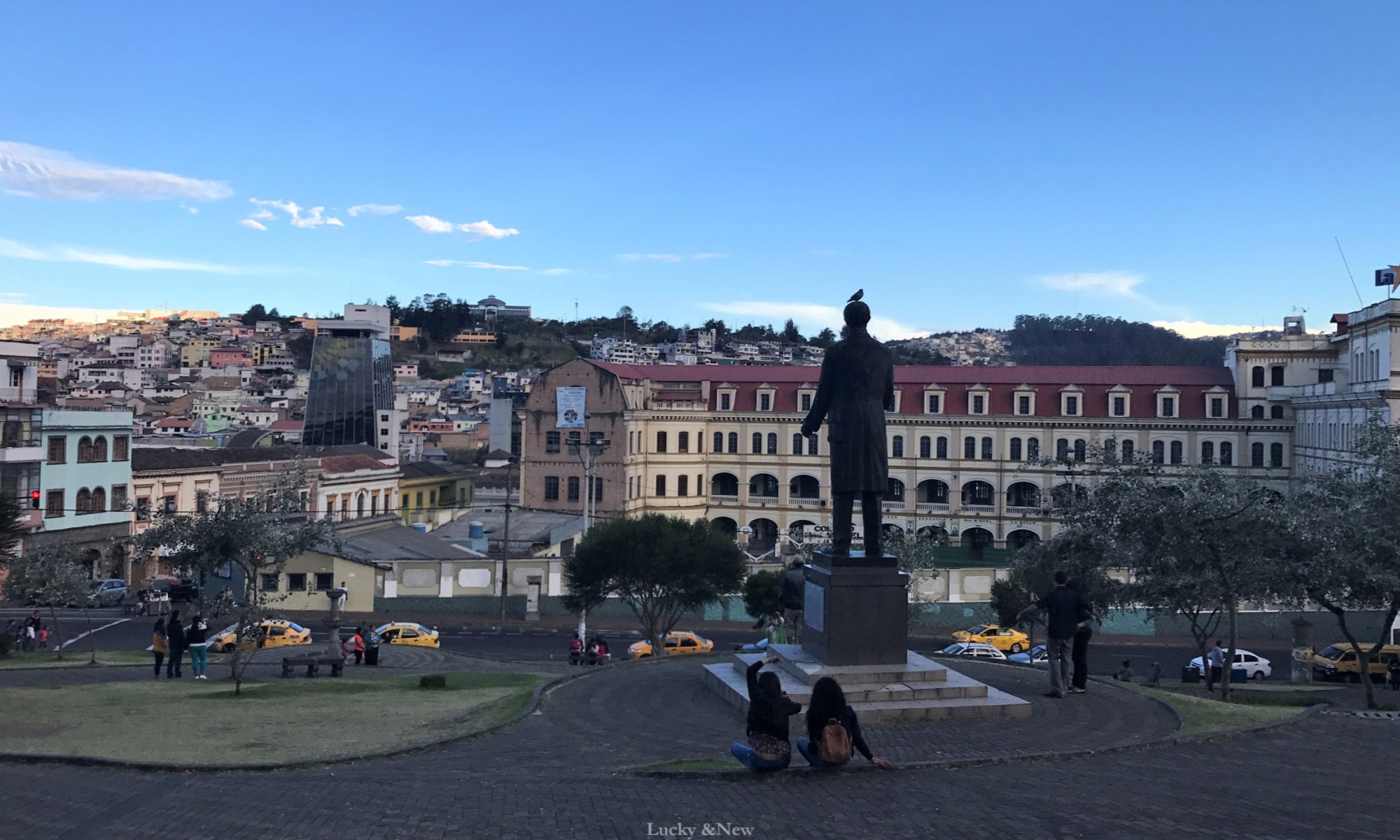
Quito is a very large city, spanning ~60km from one end to the other and with distinct “personalities” across the city. In particular, there is a significant contrast between the newer and business/ commercial areas of the city and the historical town. The Historic Centre is one of the best preserved Spanish colonial towns in South America and a UNESCO World Cultural Heritage site for this reason. However, whilst the buildings were really interesting and charming to see, I found it a bit disheartening that touristy shops were operating in many of these buildings. It felt like history and culture were being bastardised and commercialised and also made the town feel less orderly.
One of the site we visited in Quito was the TeleferiQo (a cable car system that runs up to the side of a volcano and provides a lookout over Quito). The TeleferiQo is part of a larger recreational/ amusement zone, which includes an amusement park. Apparently, the developers had plans to build out the base area (with malls, shops, etc) but that didn’t come to fruition. It was a bit sad seeing the abandoned infrastructure that was put in place for this (e.g., the car park–quite sizeable–looked overgrown and unused, there were dilapidated banners hanging from the walls of a set of closed-off escalators, the ticket purchase area was set up for long lines but there were very few people).
Nonetheless, it was a great way to see how expansive and large the city is; I thought the view was better during the cable car ride up than from the top as the view from the top was unfortunately disrupted and obscured by some of the mountains. Overall, I thought it was a better lookout than the one in Bogota, despite being much less popular.


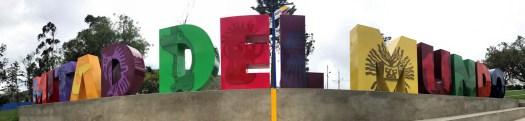
Whilst we were in Quito, we also visited the Middle of the World monuments and museums. According to our iPhones, neither of the two sites actually marked the middle (0°00′) and so, we had some fun following the compass on the phone until we found the spot.
We spent three of our days in Quito going on organised day trips to some of the surrounding sights (Cotopaxi, Quilotoa Lake and Mindo Cloud Forest). All of the tours were operated by one company (although we didn’t know this since we booked through different websites), and they were fantastic.
Cotopaxi was the first of the day trips that we did and probably my favourite one. Cotopaxi is an active volcano south of Quito (visible from parts of Quito) and one of the highest volcanoes in Ecuador and globally (5,897m). On the day we went, the drive to the volcano was grey and rainy and following from our experience in Tuquerres/ Laguna Verde, I was definitely concerned that we were going to be hit by low visibility again. I was pretty relieved when we effectively drove through the clouds and saw Cotopaxi against a blue backdrop.
The volcano most recently erupted ~2 years ago and as a result, the refuge (~4,800m) is the highest point that they (apparently) let tourists climb to. We started our trek at ~4,600m altitude and even though the climb was only for 200m in altitude (obviously more in distance travelled), the snow and wind made it extremely tiring and difficult. I felt so tired, numb and cold by the time I arrived at the refuge and I have never welcomed hot chocolate more. One of the things they offered is a stamp (in your passport or otherwise) saying you made it to the top of the volcano–I thought that was pretty cool.
The tour also included a downhill bike ride to Limpiopungo Lagoon. I wasn’t a huge fan of this component–the road was bumpy and rocky, which made it difficult for me, but I presume for the more experienced cyclists, it was probably not the ideal conditions for gathering speed. The lagoon itself was also not that special, I thought.


The drive to the Quilotoa crater lake was longer than I had anticipated. We stopped at a couple of indigenous markets along the way, which was good in that it helped break up the journey, but not so good because I wasn’t too sure if we were being insensitive by going and observing how the indigenous Ecuadorians go about their regular shopping (maybe I was being too sensitive).
Quilotoa itself was very cool. From the “entrance” at the top of the volcano, you can look down into the volcano and see the crater lake. There’s a trail that you can take along the crater’s edge, but we didn’t have time to do that. Instead, we took the path down from edge of the crater to the edge of the water. The walk down was very steep, dusty and a lot more exhausting that we had anticipated. Seeing the lake up close was pretty cool (it’s so big) and it was even cooler to kayak in it (inside a volcano!). The water was peaceful and made for very good and easy kayaking conditions; only downside was that the water was also quite cold. On our way back up, we decided to ride the mules and even they seemed to struggle at points (so it wasn’t just us being unfit…).


Our final day trip was to the Mindo Cloud Forest. I didn’t really know what a cloud forest was but I had expected something completely different heading on this trip (we also went on this trip because we had an extra day to spare…). I had imagined a forest that was seeping with mist as you walked through but Mindo wasn’t quite like that.
I thought the area was a bit of a mini Banos (see below) with a bunch of opportunities to do additional activities (tabaritas, ziplining, tubing, etc.) at an extra cost. We visited a butterfly farm whilst we were there and much to my dismay, I discovered that butterflies don’t have the natural affinity for me. The farm was interesting, but it did feel overpriced (US$7.50pp). Other things we did were ziplining (pretty fun), hiking to see a waterfall and water recreational zone (someone in the group jumped from the 12m diving board, which was pretty brave) and visiting a chocolate factory. Overall, it was a relaxing day trip but I don’t think I would’ve been upset if we missed it.


Banos
Banos is a relatively small town located 2-3 hours south of Quito. It’s known for being an “adventure” place and the town felt very much catered to this. There was a very touristy vibe with tour agency operators, hostels and restaurants/ bars lining the majority of the streets in town. The main reason why I wanted to go to Banos was to visit the Casa del Arbol and have a photo taken on the Swing at the End of the World. Everything else was icing on the cake for me but to be honest, we didn’t do many of the activities that were available.
Casa del Arbol is ~25 minutes drive from town and buses and chivas operate frequently between the main town and the site. It is also possible to rent an assortment of actual and novelty vehicles (ATVs, dune buggies, karts) from town (we rented a Hot Wheels dune buggy for the drive up!). One of the benefits of making our own way there was that we were able to avoid arriving with the busloads of tourists who were travelling to the location for the same purpose (taking a photo); some of the tourists we saw were lining up for 20 minutes for basically a 3-minute swing.
The whole area has been developed out with small outdoor activities and attractions (balancing poles, mini zipline etc) and there are now four swings (two at the original house), each with a ramp from which to somewhat launch yourself. I was a bit disappointed at how fortified the swings were (safety measure, I suppose)—it would’ve been more exciting otherwise! We spent a fair bit of time at the swing and found that the best times to visit were at the beginning of the day (right after the site opens) and towards the end of the day (just before the site closes). There were significantly less tourists then and so, we were able to actually spend time playing on the swings ( a lot of fun). One of the things we really enjoyed was watching the sunset at the swing site—there’s a café on site, there’s an elevated view of the area and there are few people around at that time.


Ruta de las Cascadas (i.e., Route of the Waterfalls) is one of the other key attractions in Banos. Basically, it’s a route starting from near the Banos town that goes by numerous smaller waterfalls and valleys before ending at the Pailon del Diablo (Devil’s Cauldron) waterfall. I felt the route to the waterfalls was very commercialised. Along the way, there were numerous small operators all offering zipline and cable car (tabarita) experiences to cross the river (some of them offered other experiences as well). The activities were fun to do, but there were just so many of them that I personally thought it detracted from the experience and the natural beauty of the site.
The Devil’s Cauldron (Pailon del Diablo) waterfall itself was pretty amazing. There was so much power in the waterfall that it was almost humbling to be in its presence. At the time we went, there were actually two routes to view the waterfall; ironically, the more expensive route doesn’t take you as close to the waterfall and instead only provides a good, safe (and dry) view from afar. We found the other route (US50c cheaper) to be far more exciting. The second route provided the option to be behind the waterfall; it involved a bit of crawling between rocks (some slippery) and getting very soaked, but it was quite an experience. The raw, pounding sound of the water as it fell from the spout was something completely different and new.


+++
1st September 2017 – 9th September 2017
 Lucky &New